

85% To Freedom
Electrify America’s New Charging Limit Shouldn’t Be Controversial


Today’s article is a guest post from Steve Palley. Steve is a Climatebase fellow and product leader who is diving deep on EV charging. You can check him out on Linkedin. Thanks Steve for adding your insights to Sustainable Advantages!
The overall state of EV charging in America is improving in terms of both customer sentiment and buildout rate.
That’s good news, but keep in mind that it’s coming from an abysmally low starting point. For prospective EV adopters without home charging or access to the Tesla Supercharger network, the friction and aggravation associated with EV charging has materially discouraged entry.
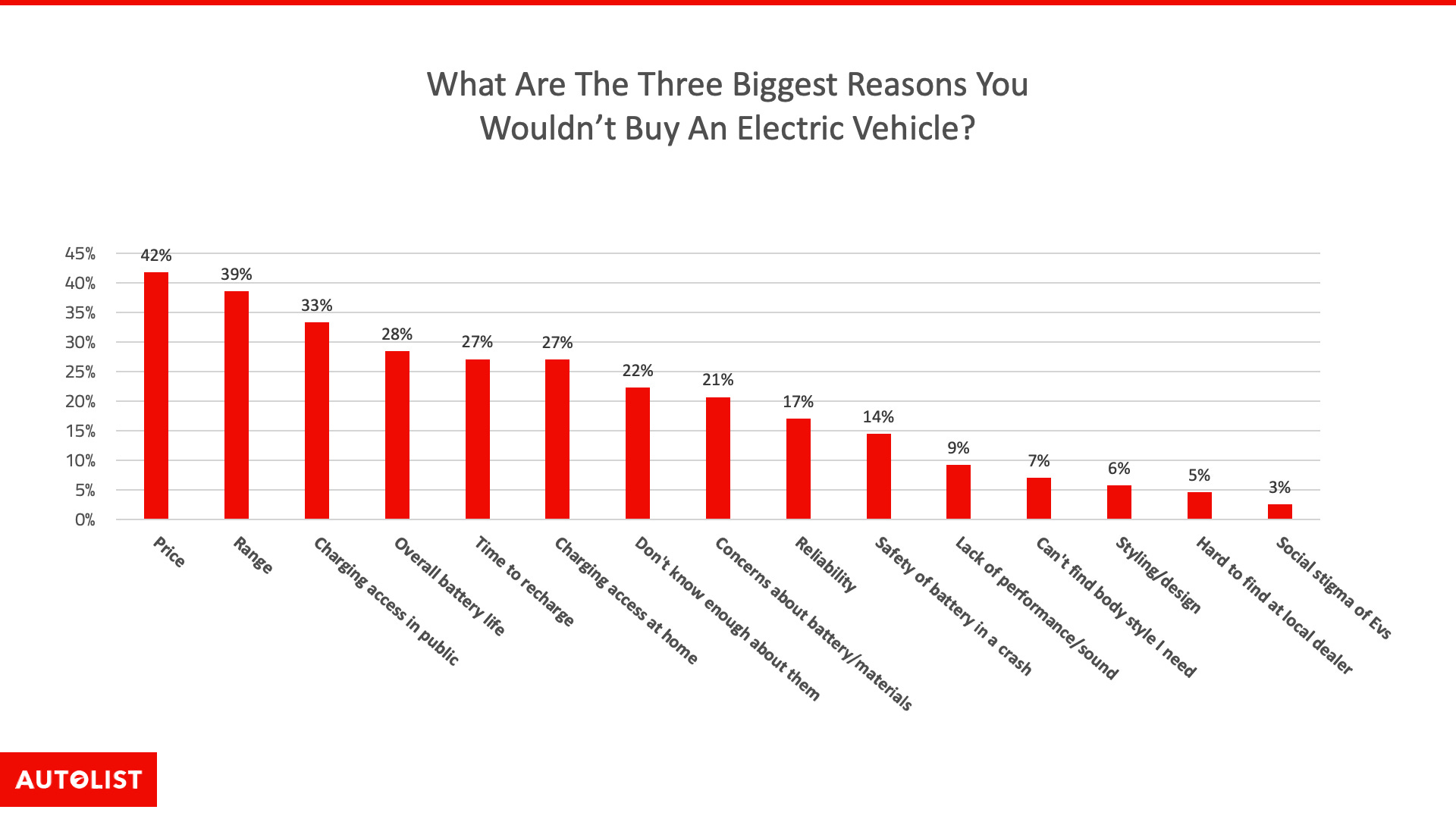
In a 2023 survey of current car shoppers, Autolist found public charging access, time to recharge and charging access at home to be the #3, #5 and #6 reasons prospective customers were reluctant to purchase an EV. Those three items are facets of the same underlying issue: charging is a bad user experience for non-early-adopters right now.
One obvious solution is to simply install more public chargers, faster. And that’s happening. But what if we could also make all of our existing public chargers a lot more efficient with a simple, nearly instantaneous change?
That’s what Electrify America, one of the largest EV charging network operators in the United States, seems to be heading towards.
EA recently announced a Congestion Reduction Pilot program across 10 urban charging locations in Southern California that will test limiting charging sessions to 85% of an EV’s total capacity. After this limit is hit, the system will start to fine laggards who sit on a valuable charging spot while they finish their lattes (or rescue puppies from burning buildings, or whatever).
This is the literal 80 / 20 cutpoint for EV charging, in that charging a battery slows way down after its charge level crosses that threshold.
Some drivers are concerned that this change penalizes drivers who legitimately need to charge to 100% for whatever reason. Others simply hate the idea of being proactively limited, in that they paid for their EV’s entire battery and don’t want to be told how they should or shouldn’t use it. And fines are never popular.
Fair enough, but what do most EV drivers hate more: waiting in line or not having that last 30-40 miles of range? I think we all know the answer, even if there’s no data to prove it yet. There will be soon, courtesy of EA’s smart experiment.
I’d further say that to whatever extent this is a problem, it’s a marketing and user psychology problem, not a user experience problem (the user experience will improve). Keep in mind that most OEMs, including Tesla, already advise EV owners to stop charging at 80% for daily driving to preserve the battery’s ability to take a charge and lower the risk of fires and explosions.
And we are talking primarily about daily drivers here, not long haul drivers. The primary users for public chargers in city centers will be EV owners in surrounding multifamily dwellings that are not yet equipped with Level 2 chargers that enable easy overnight recharge.
These customers are mostly commuting to work and back, not taking the kind of road trip that necessitates a full top-up. Note also that EA is confining the pilot to highly congested urban locations, not the arterial fast chargers used by road trippers on the way out of town. Those locations generally have more stations anyway due to more abundant real estate.
So, while this type of customer might want a full charge, they probably don’t need it, even if they don’t realize that yet. And if EA had called this a Battery Health and Safety Pilot instead of a Congestion Reduction Pilot, I suspect that it would have flown under the radar while EV owners’ collective blood pressure magically improved.
Good product people know that it is incumbent on the team, not users, to solve obvious coordination issues like this one. Bad user experience, user confusion, and anything in between is never, ever the user’s problem — it’s YOUR problem. It’s not even the user’s job to explain what their problem is! YOU need to figure it out by paying close attention, asking the right questions, running the right experiments, and eventually shipping the right solution.
That’s exactly what Electrify America is doing here.
 | A guest post by
|